How Intangible Assets Can Drive Value
Defining the “Asset-Light” Model
This article is featured in our 2026 Global Asset Insights Report. Access the full report to get insights across sectors on the outlook for 2026 and themes impacting the ways companies do business. Read the report >
Inflation, ongoing supply chain constraints and rapidly shifting trade policies are all expected to impact consumer spending this year, with the global forecasts anticipating tighter consumer budgets.1 Consumer brands are already seeing these effects in lower foot traffic, reduced basket sizes and a greater emphasis on promotions and value-based offerings as shoppers seek to stretch their budgets further. For 2026, this shift in consumer sentiment reflects heightened caution and a greater focus on essential purchases, as economic uncertainty prompts consumers to reevaluate their priorities and cut back on discretionary expenses.
As consumers’ spending power becomes more limited and cautious, the question for retailers and other consumer brands becomes: how do we re-think our model while retaining our core customers and attracting new consumers? This question is especially pressing for companies in fashion, footwear and home goods—industries that have struggled with overproduction and large physical footprints.
In 2026, we anticipate that more companies will answer this question by looking for opportunities to shift to an “asset-light” model. The asset-light approach enables companies to adapt more rapidly to market changes, reduce operational complexities and better allocate resources to areas that can generate the most value.
“As consumers’ spending power becomes more limited and cautious, the question for retailers and other consumer brands becomes: how do we re-think our model while retaining our core customers and attracting new consumers?”
—TOBIAS NANDA, HEAD OF BRANDS
The principles of an “asset-light” model are simple in practice but potentially transformative. By reducing fixed costs, reducing investments in hard assets like real estate and focusing capital on what the brand does well, companies can derisk their investments.
Perspectives: Laura Ashley
The revitalization of Laura Ashley shows the opportunity for strong brands with outdated business models to transform into successful asset-light operations. Gordon Brothers acquired the brand, archives and related intellectual property from insolvency in 2020.
We partnered with key manufacturers, retailers and e-commerce players to launch Laura Ashley globally across multiple categories with a focus on fashion, accessories, home and hospitality by leveraging licensing as a strategy to find best-in-class partners who specialize in certain categories and tapping into the expertise of these licensees. We invested heavily in marketing and were able to draw a new generation of consumers into the brand while remaining true to its incredible heritage. In 2025, we sold the Laura Ashley brand, archives, and related intellectual property to Marquee Brands.
For instance, for a well-known brand experiencing liquidity constraints, the traditional path in the past would have been liquidation. Instead, an “asset-light” model identifies its intangible assets, like its brand reputation, design, product development and marketing, as its most valuable assets and works to increase that value. To invest more in those assets and relieve financial and operational burdens, the company can change how it operates by partnering with third parties to run its stores and manufacture its products under strict brand guidelines.
Ultimately, as the consumer landscape evolves, the asset-light model stands out as a strategic approach for strong, well-known brands at an inflection point and facing difficult headwinds. An asset-light model empowers brands to remain agile, focus on what they do best and weather economic storms without sacrificing their long-term prospects.
Categories like apparel at risk for consumer cutbacks
Intended change in spending in next 6 months (%)
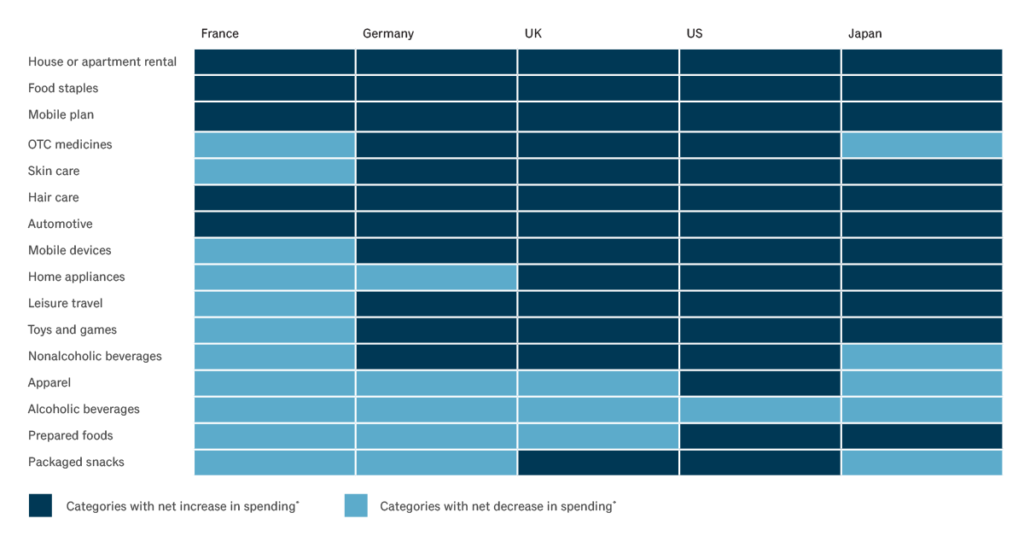
Source: BCG Global Consumer Radar Survey, November 2025. *Percentage of consumers who expect to increase spending minus percentage who expect to decrease spending. Data shown for select markets only. N = approximately 9,200.
Want to read more insights like this? This article is featured in our 2026 Global Asset Insights Report. Access the full report to get insights across sectors on the outlook for 2026 and themes impacting the ways companies do business. Read the report >
-
Alix Partners, 2026 Global Consumer Outlook.